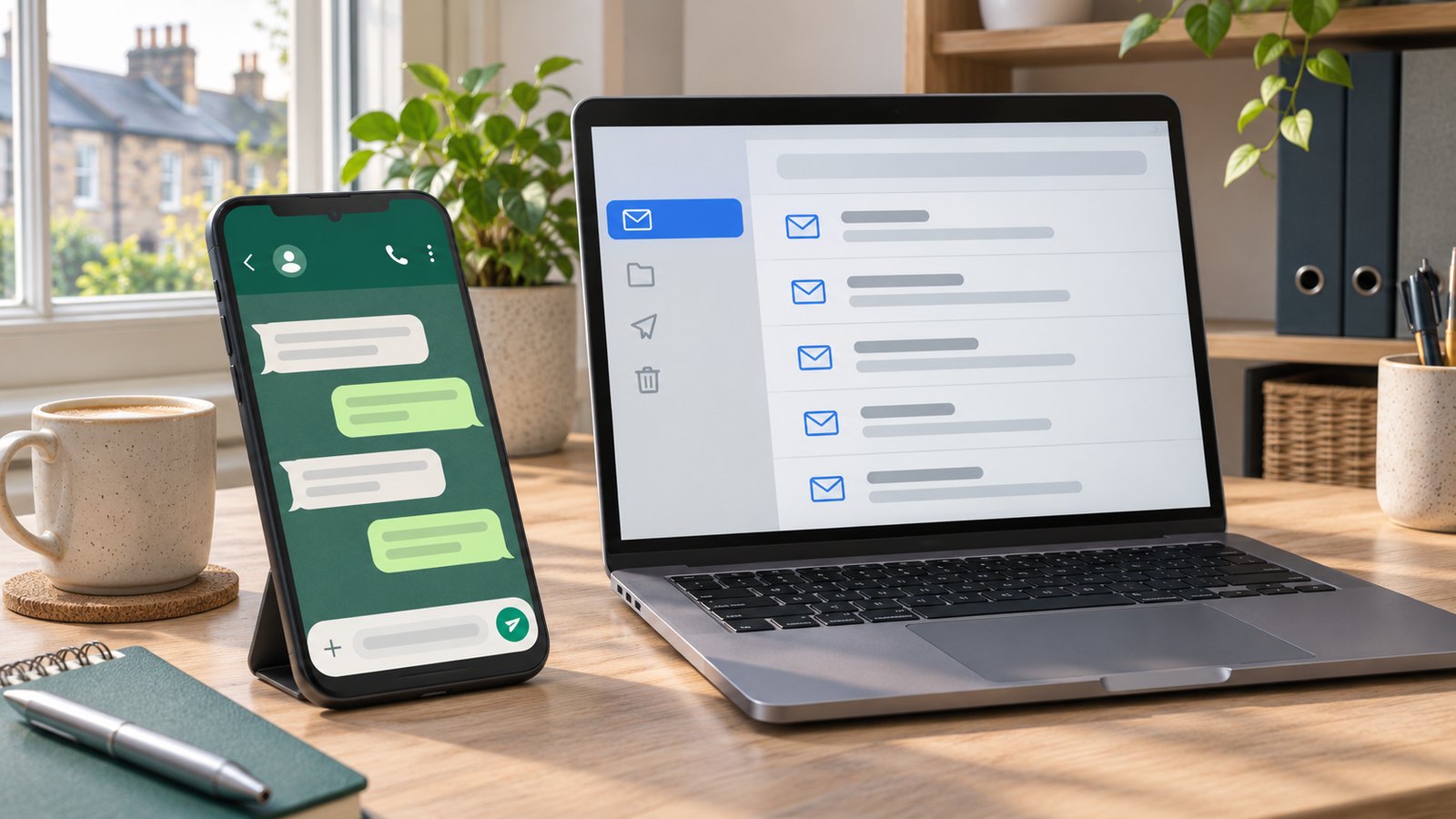
WhatsApp vs Email Marketing for Small Businesses
A homeowner fills in your quote form on their phone. You send an email asking what work they need and when they’re free. Two days later, you’re still waiting. Would they have answered a short WhatsApp message sooner?
That’s the question I took from a clip of Chris Dillon, known as The WhatsApp Guy, speaking at HighLevel Live Manila. If you run a business that depends on enquiries turning into appointments, the question is worth testing with your own customers.
What did the video’s 2.5% and 55% figures measure?
Dillon cited an email click-through rate of about 2.5%. He then mentioned about 18% for SMS and 55% for WhatsApp while discussing clicks and replies. He also reported that his own WhatsApp reply rate was closer to 85%. Chris Dillon’s speaking page
An email click and a WhatsApp reply are different actions. A customer who replies “Thursday works” can move an enquiry forward without clicking a link. The clip gives little detail about the campaigns or audiences behind the figures, so I’d use them as a starting point for a test. If the goal is a booked appointment, count bookings from both channels.
When would I use WhatsApp?
I’d start with enquiries where one quick answer would move things forward. A home improvement business might need a photo before it can discuss a quote. A local garage might have two slots available and need the customer to pick one.
Here’s a simple example for someone who has agreed to be contacted on WhatsApp.
Hi Sarah, it’s Spencer. Thanks for asking about a window quote. I can call tomorrow at 11 am or 4 pm. Which suits you?
That’s easy to answer from a phone. I’d use email for the written quote, the specification and anything the customer may want to find again or forward to someone else.
How to compare WhatsApp and email on your own enquiries
- Choose one outcome. For example, count how many new enquiries turn into booked calls within seven days.
- Compare like with like. Use leads from the same source who have agreed to hear from you on both channels. Randomly split them into two groups and send the same offer and next step at a similar time.
- Track bookings and staff time. Divide bookings by the number of leads contacted on each channel. Track replies and time to first response as well. A channel that gets more replies may also take more staff time to manage.
For UK promotional messages, set clear expectations when people opt in and make it easy for them to opt out. The ICO’s electronic marketing guidance explains when consent is required and when a limited soft opt-in may apply. WhatsApp Business also has its own opt-in requirements. ICO guidance on electronic mail marketing · WhatsApp Business Messaging Policy
If you’re curious whether WhatsApp would help, try it on one enquiry form for one service. The result I’d look for is more bookings from the same number of enquiries.